

-min.jpg)

OVERVIEW
Solar PV systems take energy from the sun and turn it into electricity we can use in our homes and buildings. Some systems are connected to the grid and some are not. They are called "grid-tied" when they are connected, and called "off-grid" when they are not connected.
Grid-tied systems, like in the picture below, can send extra power made by the solar panels to the BC Hydro grid.
Off-grid systems need somewhere to store the extra power produced by the panels, using things like batteries.

Each solar PV system is sized and developed to meet a site’s specific requirements.
This includes consideration of:
-
System connection to the grid
-
Battery storage requirements (when off grid)
-
Site (roof or unobstructed ground) surface area
-
Azimuth (building orientation)
-
Roof slope
-
Site shading; and
-
Energy demands of the building
ROOF-MOUNTED SYSTEMS
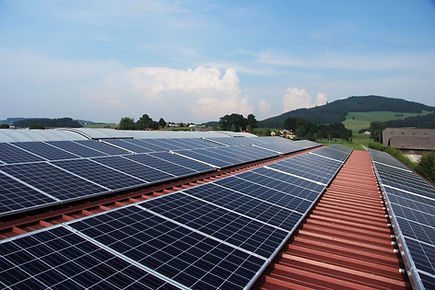
Installed on the roof of a building, roof-mounted solar PV systems are connected directly to a building’s roof and existing electrical system and provide power directly to the building as required.
These systems are specific to each building, and account for a roof’s slope, surface area and azimuth, along with the other factors outlined above. Anticipated wind and snow loads are also considered when designing a roof-mounted solar PV system.
GROUND-MOUNTED SYSTEMS
Ground-mounted solar installations utilize space afforded by fields and open areas, as shown in Figure 6-3 below. Unlike roof-mounted systems, ground-mounted installations can be constructed as steady (immobile) systems, or as tracking systems which follow the sun throughout the day or seasonally.
A ground mounted system may be installed in cases where a roof is not suited for a solar installation. This may occur when:
-
The roof is old or in poor condition
-
The roof area is insufficient to support a cost-effective solar installation
-
A roof does not have the correct azimuth for solar energy production, such as when a roof is facing north
-
Shading occurs from a tree or building in proximity to the installation
-
A resident may face challenges in accessing the roof for cleaning and/or maintenance of the panels

SOLAR PV PROJECTS & BC HYDRO NET METERING REGULATIONS
As of February 14, 2019, BC Hydro indefinitely suspended its Standing Offer Program (SOP). This program allowed larger-scale (up to 15 MW) renewable energy projects to sell their generated electricity to BC Hydro through a long-term electricity purchase agreement (EPA). The suspension of the SOP constrains / eliminates the viability of most clean energy project development opportunities in BC.
Since the suspension of the SOP, BC Hydro’s only active electricity procurement program is the Net Metering Program. The regulations of the Net Metering Program require participants to build renewable energy projects which are no larger than 100 kW and only supply power to a single home or building per year.
Should participants build a renewable energy system which produces more electricity than the building uses on an annual basis, the surplus electricity is sold to BC Hydro at the market rate via the BC Hydro Net Metering Program. The market price for annual surplus electricity is calculated on January 1 every year and is based on the daily average wholesale electricity prices in Mid-Columbia for the previous calendar year, converted to Canadian dollars using the average annual exchange rate from the Bank of Canada for that year13.
Due to the high installation cost of solar PV systems and the lower rate of electricity sold to BC Hydro, the most cost-effective option for a solar PV installation is to size the project to meet the annual electricity demands of the home or building on which it is installed. If desired, a solar PV installation which produces more than a building’s annual electricity demand could be constructed, though a more cost-effective option is to size the system to meet a building’s annual electricity demands.
SOLAR RESOURCE OPPORTUNITY REVIEW
The success of a solar PV project at a site depends on multiple factors, including:
-
Solar radiation
-
Local climate conditions
-
Site shading restrictions
-
Accessibility to the grid for interconnection
-
Electricity rates
Of most importance, the location and orientation of the solar array are crucial in assessing the potential viability of a solar PV project and its expected energy production. Typically, a solar PV installation will produce the greatest amount of power if it is facing due south at an angle equivalent to the site latitude, but this varies depending on the geographical location of the installation and site shading restrictions.
To assess the viability of solar PV projects in the rural Upper Skeena, a preliminary assessment of solar resources has been completed. This includes referencing NRCan data and BC Hydro’s Integrated Resource Plan Solar Potential Map, as illustrated in Figure 6-4 below.

SUMMARY OF SOLAR PV OPPORTUNITES
Should individuals be looking to develop a solar PV project, they should consider several aspects which can greatly influence the feasibility of the project – both in terms of energy generation and financial feasibility of the project. These considerations are outlined below.
Site Requirements
This factor depends on the actual amount of available sunlight – both direct and scattered – and how that figure compares to the electricity required from the proposed installation. To help make this determination, solar systems output is typically measured in kilowatt-hours per square meter (kWh/m2) or watts per square meter (W/m2). It is also vital to note that PV panels can vary in their efficiency, so the specific efficiency needs to be factored in when comparing potential configurations and other solution considerations.
Key questions include:
How much surface area will be required to generate the desired amount of power?
Will that be available within the proposed site?
Will a system of that required size and surface area be financially viable? Both to cover the costs initially and to recoup that investment over time?
Planning Requirements
There are two major solar energy systems:
Roof-mounted systems are installed on the roof of a building and connected directly to the building’s existing electrical system. These systems provide power to the building first, any additional power required would be pulled from the grid and any excess power produced would be pushed to the grid. These systems are designed to account for a roof’s slope, surface area and azimuth, along with the other factors outlined above. Anticipated wind and snow loads are also considered when designing a roof-mounted solar PV system.
Ground-mounted systems: The foundations of ground-mounted systems will vary depending on the ground and soil type at the site. Due to the additional mounting and foundational equipment required for ground-mounted systems, these installations are typically more expensive than a roof-mounted system.
With these considerations in mind, along with the information presented in the map above, it is apparent that the solar PV resource in the region is moderate, with an average solar PV potential of 3.5 kWh/m2. Referencing this value and the information in the map shown above, Table 6-2 below provides a high-level analysis which demonstrates the average solar PV energy generation for varying sizes (capacities) of solar PV systems which may be installed in a home or community.
The sizes of systems presented in the table below represent three key solar PV system capacities which may be of interest to a typical sized home / resident of the rural Upper Skeena region.t and edit me. It's easy.