
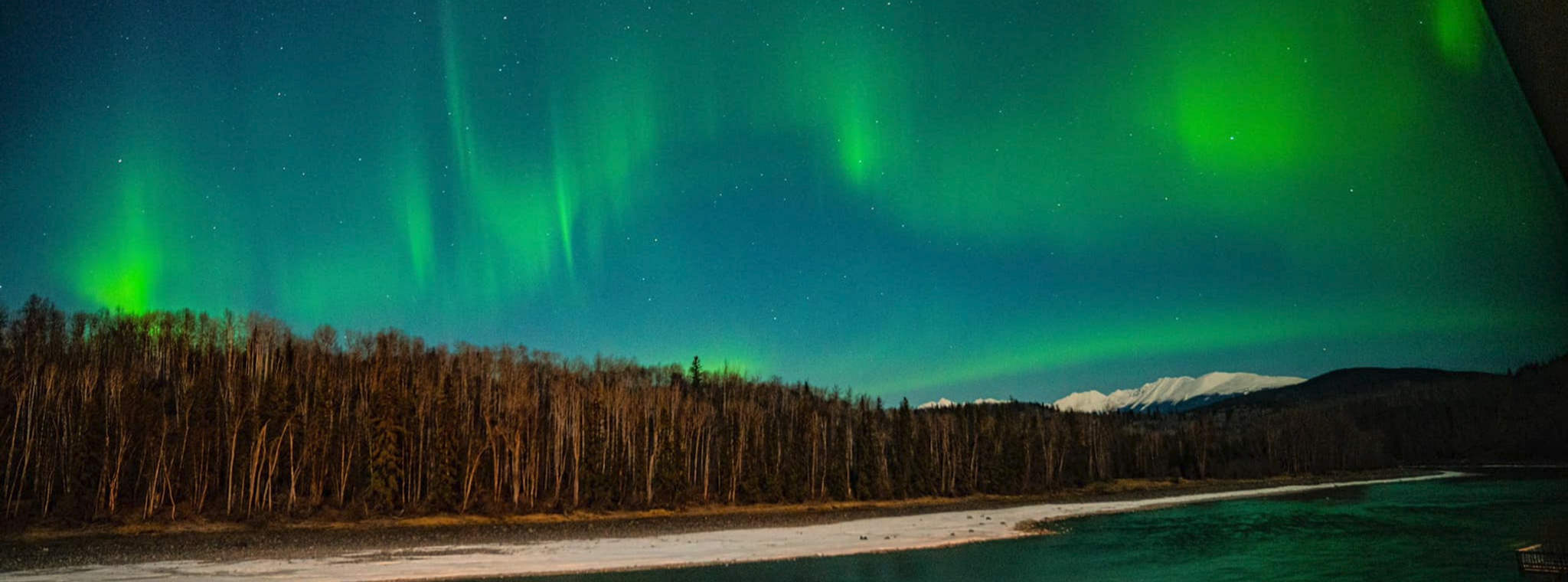

In the vast, remote northern landscape of the Upper Skeena region of Northern British Columbia (BC), clean energy discussions extend beyond environmental and economic dimensions, encompassing the rights, cultural identities, and futures of all communities in this diverse area. These include the Gitxsan Nation, neighboring Indigenous nations, and non-Indigenous residents who rely on the land and resources.
When assessing renewable energy technologies and modern heating infrastructure for the Upper Skeena Decision Making Matrix, understanding local climatic factors (including climate change trends) and regional geographies is essential. Evaluations of renewable options such as solar, wind power, geothermal, and small hydro require specific data such as regional temperature ranges, annual sunshine, wind patterns, and soil conditions to determine viability.
We are grateful to the Gitxsan Nation leaders, whose connections to this land span millennia, who have supported this project by incorporating important aspects of their accumulated and inherent knowledge.
INTRODUCTION


GEOGRAPHY &
SENSE OF PLACE
The Skeena Watershed, 25% larger than Switzerland, at approximately 54,342 square kilometers, is a biodiversity haven. This area is home to all five species of Pacific salmon, the largest wild steelhead in the world, and a host of other megafauna such as grizzly bear, moose, and wolverine. Its rivers, lakes, and surrounding landscapes—largely untouched by pollution—nourish both human and ecological health, shaping the cultural and economic pillars of Upper Skeena communities. The Babine,Bulkley, Kispiox, and Skeena Rivers flow through areas integral to Gitxsan culture and connection, forming a profound relationship between people and place.
Gitxsan ecological knowledge, rooted in the laws of Adaawk (oral history) and Ayookw (traditional law), has been described as a sophisticated understanding of wildlife patterns, ecological rhythms, and land stewardship practices. As we, at the Skeena Watershed Conservation Coalition (SWCC), understand it, this knowledge is preserved through both oral and written records and guides sustainable land use, with Gitxsan community members continuing to hunt, trap, and gather medicines as part of their ongoing relationship to their unceded lands.
Non-Indigenous residents of the Upper Skeena have also engaged in sustainable practices and resource management. Local farming, forestry, and small-scale power initiatives reflect a regional commitment to preserving natural resources for future generations.
The Gitxsan and the health of the Skeena watershed have been connected for thousands of years, building a governance system grounded in sustainability and respect for the land’s capacity. Colonial-era resource extraction, however, disrupted this balance, introducing economic marginalization and environmental degradation (Union of British Columbia Indian Chiefs, 2019).
From the teachings of Gitxsan knowledge holders, SWCC has learned Gitxsan cultural perspectives on energy development reflect a holistic view, emphasizing balance, resilience, and ecological integrity. We are told that all Gitxsan laws come from the foundational rule of Gwalx Yee’Inxs which has been defined to us as, “We have received a full basket and it is our duty to pass a full basket on, never diminishing in value. It includes the tangible and the intangible, the knowledge of how to use the basket and is the place from which all future generations are born to and from.” This worldview necessitates an energy transition that respects the environment, incorporates Gitxsan knowledge, and ensures equitable outcomes for Indigenous communities. These principles are now guiding the clean energy transition, which has the potential to address historical injustices while benefiting the broader region. Collaboration among all residents is critical for fostering a sustainable and equitable future.
In the Upper Skeena, SWCC envisions a future where clean energy aligns with and prioritizes Gitxsan cultural ties to the land, advancing both ecological and social well-being for all. This includes advocating for practices honoring treaty rights, encouraging community involvement, and respecting the interconnected relationship between the land and its people.
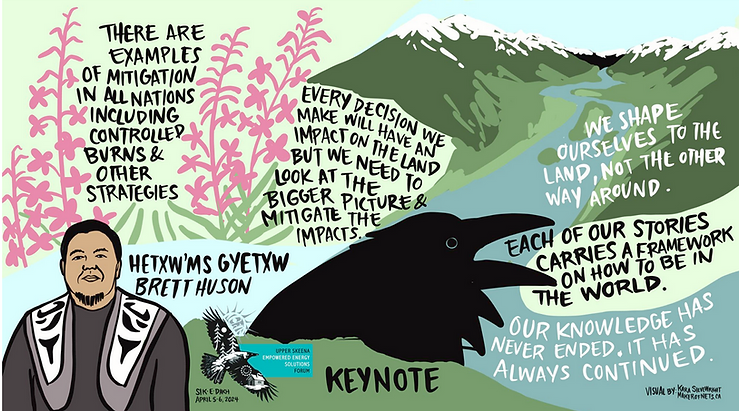
Image: Graphic recording of Gitxsan author, knowledge keeper & artist Hetxw’ms Gyetxw (Brett Huson) -
SWCC’s keynote speaker at the Empowered Energy Solutions Forum, 2024.

Jennifer Bulleid

Brett Vidler
STUDY AREA
This study focuses on the Upper Skeena, encompassing areas reliant on diesel or BC Hydro's power grid. It includes the eastern boundary of Gitxsan Lax Yip (Territory) Madii Lii in the Suskwa Valley and the northern edge near Bear Claw Lodge in the Kispiox Valley. The region reflects a rich intersection of Indigenous governance, local climate challenges, and diverse energy needs (McGowan, 2019).
We hope this study offers community members, leaders, and decision makers an opportunity to make informed decisions about their use of energy for their homes and business needs.
Hazelton, BC has historically been closely linked with Gitxsan First Nation communities and the nearby Gitxsan communities of Gitanmaax, Anspa’yaxw (Kipsiox) and Sik-e-Dakh (Glen Vowell) Gitanyow, Gitsegukla, and Gitwangak are also part of the six Gitxsan communities in the Upper Skeena.
The Gitxsan Nation, with territories around the Skeena and Kispiox Rivers, consists of several bands (or reserves) - with an estimated total of 13,000 Gitxsan members- 70% of whom live on their traditional territories (Gitxsan Phrasebook, 2017). This population is predominantly young, with many members under the age of 30. Gitxsan reserve communities work collectively through the Gitxsan Government Commission (GGC) who coordinates essential services and programs across communities, often collaborating with schools and social services to address the unique needs of its population, including education, health, and economic development.
While each Gitxsan band has distinct governance systems and priorities, they share resources and cultural connections, working collectively to uphold principles of land stewardship and cultural preservation.
GEOGRAPHY &
CLIMATE
BC’s climate is shaped by mountain ranges running north south and proximity to the Pacific Ocean, which drives heavy precipitation along the coast. The west coast, influenced by oceanic currents, is Canada’s wettest region, while the interior, including the Skeena, experiences a blend of maritime and continental conditions. Winters are long, snowy, and cold, while summers are short and dry. With climate change, “typical” conditions are shifting, altering the hydrology, ecosystems, and local weather patterns that define regions like Upper Skeena (Zhang et al., 2019)6.
Warming trends are particularly pronounced in northern BC, where average temperatures have risen by 1.9°C since 1948. By 2100, this increase may exceed 5°C, impacting freeze-thaw cycles, snowpack, and stream flows. Precipitation is projected to increase by 5.7% by 2050 and nearly 14% by 2100, with seasonal shifts leading to droughts, floods, and other challenges (Bonsal et al., 2019). Extreme weather, including heat waves and intense precipitation events, is also likely to intensify, further complicating the preservation of water quality and ecosystem health (Vadeboncoeur, 2016; Curry et al., 2019) 6.
Warming trends will drive a number of climate changes for BC, including:
-
Warmer temperatures in all seasons: leading to more extreme heat events and longer growing seasons (source: Canada’s Changing Climate Report). The annual average temperature in BC would increase by over 5°C by the year 2100, under the high emissions scenario, with warming most pronounced in the winter (Zhang et al., 2019)6. The number of days below 0°C will also decrease, leading to impacts on ecosystems, freeze-thaw cycles, the design of building heating systems, etc.;
-
Annual precipitation increases by 5.7% by 2050, and by 13.8% by 2100 under the high emissions scenario (RCP 8.5; Zhang et al., 2019) 6. Changes in seasonal precipitation—including longer summer droughts—will pose a threat to current patterns of water accumulation (e.g., decreased snowpack, glacier mass loss) and discharge, and will lead to water scarcity issues in the summer, challenging B.C.’s ecosystems, agriculture and forestry industries, and communities (B.C. Ministry of Environment, 2016);
-
Extreme precipitation events becoming more frequent and intense and increased frequency of atmospheric river events6 (Curry et al., 2019; Vadeboncoeur, 2016; Pinna Sustainability, 2014). These events will exacerbate the impacts associated with changes to seasonal precipitation: for example, by contributing to faster runoff, thus increasing the risk of flooding, landslides, and sediment and pollutant loading in drinking-water reservoirs and aquatic ecosystems;
-
Changes in streamflow, including the timing of spring freshet, timing and duration of summer-autumn low-flow, and higher water temperatures during low-flow periods (Bonsal et al., 2019) 6, leading to increased flood risks and changes to aquatic ecosystems;
-
Changes to ocean conditions, including stronger storm surges, rising sea levels and increasing acidification (Greenan et al., 2019; Vadeboncoeur, 2016) 6, leading to increased flood risks and changes to marine ecosystems;
-
Increased wildfire risk resulting from changing precipitation and temperature, along with changes to wind patterns (Bush and Lemmen, 2019) 6 and shifts in ranges of pests such as the Mountain Pine Beetle, leading to ecosystem changes and impacts on infrastructure and health; and
-
Changing forest conditions and changes in plant and animal distributions (Government of B.C., 2020) 6, leading to impacts on economic productivity, ecosystem health, and Indigenous health and wellness, etc.
Drought in the Skeena River region has significantly affected the local ecosystem, particularly impacting salmon and steelhead populations. Over the past decade, recurring low snowpacks, early melts, and reduced glacial input have contributed to lower summer water levels and higher temperatures in the river. These conditions are challenging for migrating fish like sockeye, Chinook, and steelhead, as warmer and shallower waters can increase stress, disrupt spawning, and make the fish more susceptible to predation and disease (Skeenawild Conservation Trust, UNBC) .
As climate change intensifies, the impacts on both human and natural systems in northern BC are expected to grow, underscoring the urgent need for adaptive measures. Recommendations include expanding vegetation to shade rivers, increasing monitoring of stream temperatures, and better integrating emergency preparedness to support impacted communities (CleanBC; IISD).
Image: Graphic recording of Upper Skeena community members reflecting on climate mitigation & adaptation

CULTURAL CONTEXT
OF CLIMATE CHANGE
As part of our work in the Skeena region, Indigenous communities, including the Gitxsan, have shared their observations on environmental changes that contradict traditional knowledge, largely driven by climate change and resource extraction. This disruption has disproportionately affected Indigenous territories, eroded traditional practices and created reliance on external economic systems (Turner & Clifton, 2009) 6.
Today’s climate crisis is seen as a consequence of a worldview that prioritizes resource exploitation over ecological balance, a shift that threatens environmental stability in the Upper Skeena.
BC has already experienced climate impacts like wildfires, floods, and extreme temperatures, disproportionately affecting rural, remote, and Indigenous communities. In 2024, for example, the Gitxsan Watershed Authority reported a critical decline in Skeena chinook salmon, attributed to warming rivers and decreased streamflow, directly challenging food security and traditional harvesting practices (Gitxsan Watershed Authority, 2024). Accelerating a transition to clean energy in Indigenous territories requires integrating Indigenous rights within provincial and federal energy policies. BC’s adoption of the UN Declaration on the Rights of Indigenous Peoples (UNDRIP) in 2019 is a promising step, aiming to co-develop recommendations for clean energy initiatives that align with Indigenous priorities. This alignment creates a pathway toward cleaner energy that respects Indigenous governance, reducing diesel reliance while promoting reconciliation and environmental protection (Pembina, 2023).
Gitxsan Matriarchs at the 2024 Empowered Energy Solutions Forum described their experiences with climate change, situating their perspectives within a Gitxsan context. One Matriarch shared:
“In our houses, traditionally we have what in English you’d call different professions. Some would look after salmon; some would look after the land. We had our own biologists for thousands of years, and finally, other people are starting to understand this” (Barb Huson, 2024).
In recent years, environmental disasters like wildfires, flooding, and record-breaking temperatures have added to the challenges facing First Nations communities. These crises, compounded by the COVID-19 pandemic, highlighted vulnerabilities such as dependence on global supply chains for basic needs, putting remote communities further at risk.
UNDRIP & ENERGY SECURITY
A just energy future requires integrating Gitxsan governance systems into energy planning, ensuring that development enhances cultural continuity and community well-being (Smith, 2022). Collaboration between policymakers, developers, and the Gitxsan Nation, rooted in trust and respect, will enable the transition to a sustainable energy landscape.
The United Nations Declaration on the Rights of Indigenous Peoples (UNDRIP) underscores the rights of Indigenous peoples to self-determination, land, and resources. BC’s adoption of UNDRIP in 2019 is a promising step toward ensuring Indigenous rights are upheld in energy development. The legislation requires government actions to align with Indigenous priorities and emphasizes Free, Prior, and Informed Consent (FPIC).
This principle has particular relevance in the Upper Skeena. For instance, Gitxsan leadership and community members have voiced significant concerns about projects such as the Ksi Lisims LNG terminal. Calls for broader environmental assessments to consider impacts on Gitxsan communities and salmon populations exemplify the need for inclusive and transparent energy planning (source: Gitanyow Chiefs).
By prioritizing collaboration and recognizing diverse perspectives, this study envisions a clean energy transition that respects Indigenous governance, addresses climate challenges, and supports the well-being of all Upper Skeena residents. Together, the land and its people can shape a sustainable, equitable future rooted in shared stewardship.
This project will support communities and community members of the Upper Skeena in being a leader in renewable energy use, while reducing emissions from fossil fuels burned for heat and power by the adoption of renewable or highly efficient energy technology.
This vision statement was used to guide the development of the REP project. Building upon the vision statement, several principles have and will be used to guide the Regional Energy Plan (REP) development and future related projects:
-
That the process to develop the REP allows for meaningful community engagement and input
-
That the REP encourages economically viable and environmentally sustainable solutions.
-
The REP will summarize the Upper Skeena Rural region energy use today and offer strategic and sound solutions on how to move forward towards a sustainable and secure energy future.
It is anticipated that the REP will bring social, environmental benefits, and long-term financial benefits to the region’s residents and businesses once the plan moves to implementation. The underpinning motivation for this project is for the Upper Skeena rural region to have a secure and sustainable energy future.
Intended Uses of the Upper Skeena “Rural” Regional Energy Plan
-
To assist in building energy literacy in community
-
To articulate regional energy goals and issues to all levels of government
-
To articulate regional current energy issues to BC Hydro
-
To assist community in funding applications related to renewable energy
-
To name the obstacles or issues that prevent energy security & sovereignty
This Regional Energy Plan is a living document that will be built upon as new information and changes occur.